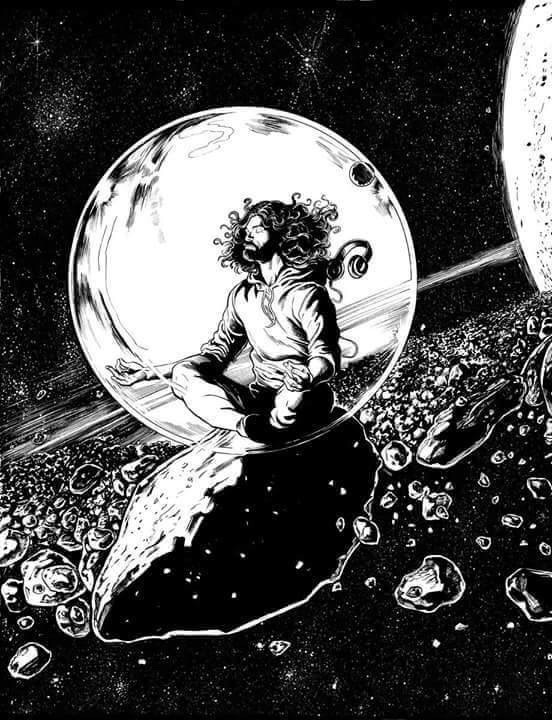
Sometimes I feel like this – especially the hair and bubble part.
Sometimes I feel like this – especially the hair and bubble part.

Reality on top of reality….
I took this photo two weekends ago on a photo trip to Alabama Hills, here in southern california. I was playing around with multiple exposures and my camera settings and ended up with this. I love it’s dreamy quality, and ethereal-ness. Sometimes when I see, hear, or read about things I’ll have a little zip in my energy, like all the right notes coming together to make a chord, that tells me that there is a truthiness to a thing. This photo was like that.
My meditation sessions have begun to grow more bizarre and visual – and it’s also been intersecting with my dream life. For a very long time I wasn’t doing that great at remembering my dreams upon waking, but lately they’ve been very real. Bizarre, and not profound necessarily, but very visual and real.
My meditation has been likewise – I’m not necessarily having stereoscopic hyperreal imagery as if I was in a movie. It’s more like the sense of the imagery, of the knowing that it’s there, with periodic splashes of a real visual sense of seeing.
That might make much sense – but what I see and sense is like this photo above. Worlds laid on top of of worlds, reality on top of reality. This is more of a sense of thing, a sense of what’s real.
In the past few weeks, despite lots going on in my regular life (crazy work, trying to buy a house etc), when I’ve managed to sit down it’s been intense and highly concentrated fairly quickly. This is surprising to me because I feel so scattered off the cushion. It’s so interesting how consciousness doesn’t give a f* about what’s happening in your boring old life – no matter how UNboring you might think it is.
In that state, and then off the cushion I’ve been feeling a deep sense of what I can only describe as wobbliness. Similar to the flicker I felt on my retreat, but instead of all of awareness flickering, it’s more just a weird feeling of wheeeeewhaaaaing and instability. It’s a sense of pressing up tightly against the side of a bubble of reality, and trying to figure out what’s on the other side.
It sounds totally nutty, but yesterday I was walking around all day after meditation with this knowing that there was another whole world just on the other side of some indiscernible energetic barrier. I know, it’s totally crazy. In my defense though, it’s been a documented felt experience by other spiritual seekers, meditators, witches, shamen, magicians, monks, saints you name it.
So I did more research on these experiences and found a kinship with all sorts of other esoteric traditions. And I feel less crazy now, but still slightly like Alice falling further and further down the rabbit hole.

Spencer Kirk | @spencer.kirk
Oneness
This morning I had a moment in meditation in which the birds outside the window were no longer outside the window but were instead inside of me. While the small one chirped I could not determine if I was causing it or not, it felt as if it was my choice for it to chirp, just like it would be my choice to dance or sing in my own body. When the raven cawed my jaw opened ever so slightly, but in meditation space it was as if my own beak was open to the heavens and I was pouring out a call to the wildness.
I then saw my body as an outline, through which I saw the wind blow and rivers flow, I saw trees grow and catch fire within me. I saw oceans swell and waves crash, and bison run. It was as if everything in the universe was pouring through me, and I was in part one with it, and in part merely stepping out of the way to allow it to pass without judgement or control.
the boundaries of who we are, and who we are not, are constantly more and more diffuse, and have never been defined. It’s just always been safer to assume a seperateness, a level of lack of control. But in reality (whatever that is) it’s clear that there is no separation. We are the rivers and the waves, the trees on fire, the mighty wind, and the birds singing their morning song outside of the window.
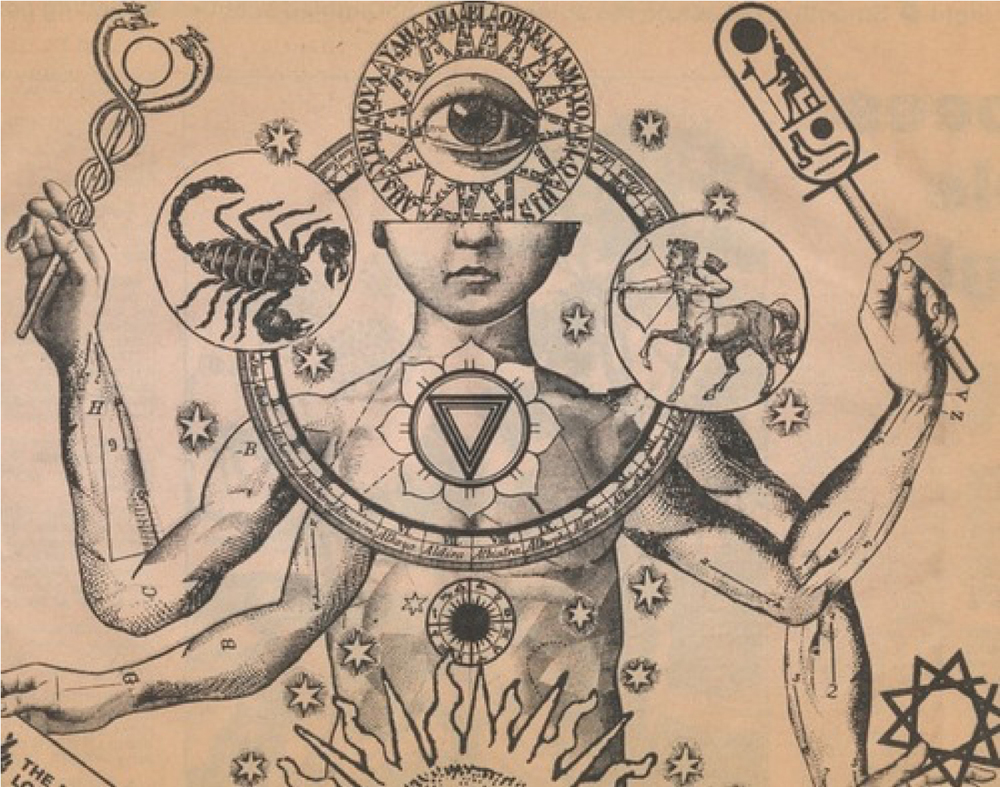
I’ve been asked to do a little write up about basic insight meditation technique, and while I’m in no ways a super experienced and esteemed dharma teacher, I am quite familiar with this technique as I do it every day (sometimes multiple times a day!)
For further and more in depth reading into this style of meditation practice please check out Daniel Ingrams “Mastering the Core Teachings of the Buddha”, Culadasa’s “The Mind Illiuminated”, or you can just go more OG and read
Mahasi Sayadaw’s “Manual of Insight”. For teachers I would recommend the esteemed Shinzen Young, who has various online resources you can check out.
If you’re going to stick with me however, I can certainly get you started.
In order to see through reality, we need to break it down into individual parts. Our brains do a great job of blending experience together so you can’t see where one sensing experience ends and the next begins. It’s hard to separate you (”SELF”) from what you’re seeing and experiencing. When we break all that down through meditation you can start to see how your reality is constructed, how your emotional states interact and influence your sensory experiences, and how your sensory experiences (amazing, horrible, and neutral) can all be broken down into smaller units of individual moment to moment sense awareness.
Why would you want to do that? Well, for one thing when you are able to break things down to that level and see the truth of the way your experiences are constructed, it’s much easier to deal with intense emotion and difficulty as it arises in life. The ability to see things as they are and experience emotions as they are without trying to change them or getting too caught up in them is a great way to reduce daily suffering in your life. This ability to feel and experience deeply but not to fight our experience or attach to our experience is called Equanimity. There’s also enlightenment, which isn’t too bad either.
*note – this is different than APATHY – which is disconnected. In this practice we cultivate an intense connection to our experience rather than a disconnection*
We typically are tracking 3 senses in this technique – See, Hear, and Feel.
See
– Can be anything you see with your physical eyes when they are open, as well as anything you see with your eyes closed (images, dancing lights, visually replaying memories etc)
Hear
– Can be anything you hear with your physical ears, as well as anything you hear with that narrator that lives inside your head that feeds you thoughts and opinions on everything.
Feel
– Is just about any other sense experience. We lump “taste” and “smell” into this one too. The important thing is that this just isn’t physical feeling like the breeze blowing on your face – it’s also emotional feeling. So if you suddenly feel anger arise – that’s also a “Feel” state.
In this technique you’ll simply see which of the 3 sense doors above are activated – which pull your attention away – and first note and then label them. SO EASY right?! In order to do this you need to know the difference between noting and labelling.
Noting
is when you NOTICE an experience in awareness – for example, you NOTICE that you feel a breeze. Perhaps you haven’t fully translated that experience into mental words yet and brought it into narration – but you’ve NOTICED what is happening.
Labelling
is putting that noticing to words with a single word label such as See, Hear, or Feel.
The distinction is important, since as you get more advanced the labeling might become cumbersome – at which point you will drop activating your language centers with labeling, and instead simply note all experience.
Step One – Access Concentration
The first 5 minutes of every meditation always consists of what I like to see as “letting the dust settle”. The first few minutes I tune in I just become very aware of all the white noise I have going on in my head. So to get started just take a few deep breaths and notice what’s there today.
Next we’ll do a simple breath counting technique for 5 minutes to develop access concentration – in this state of conciousness your mind is settled from the day to day enough that you can really focus on your object of meditation – in this case the breath.
So simply count your breaths up and down from 5, counting on the out breath and in breath.
Breathe in (ONE)
Breathe out (TWO)
Breathe in (THREE)
Breathe out (FOUR)
Breathe in (FIVE)
Then back down to one again. Do this for about 5 minutes (10 is better!)
If your mind wanders off – that’s totally fine, that’s what minds do even with lots of experience. Just start back up with the counting.
The counting is there to remind you of what you’re doing, if you lose the count it’s typically because your mind has wandered off just for a moment – sometimes in a stealthy under the radar way that you’re not aware of. Just stick with the counting as closely as possible, and pick up where you left off if you lose it. No big deal
Step Two – Noting and Labeling for senses
After 10 minutes (you can use an app like the Insight Timer that allows you to program in interval bells) – you can start with the noting and labelling.
Imagine yourself like a cat, waiting in front of three mouse holes, one for each of the senses. Notice where your attention is drawn to one, and then at the end of the out breath label it “see” “hear” or “feel” based on the breakdown above.
I find it easiest to do a rythmic noting, though some will note consistently – for me just labeling at the end of the out breath works great.
It’s that simple!
Optional Variation – Noting for Feeling States Only
This technique can also be augmented – so that instead of noting “see”, “hear” or “feel, you are just noting for feeling states.
So for example, you can sit for 15 minutes and ONLY note your emotional experience so “Angry” “Sad” “Peace” etc. If you have a hard time identifying emotions, you can look in the body to see where they might exist as contractive or expansive energy (that feeling of being “punched in the gut” or like your “heart is going to explode” etc) and what they might be. Sometimes an emotion arises and it’s not clear what it is, or there is no word for it – these feelings we label “something” or “don’t know”
This is a very effective tool for getting in touch with your emotional body if you’re the type to never really know what you’re feeling at any given time. If that’s the case you should be noting feeling states like it’s going out of style! In this technique you can also continue to note for Feeling Tone and Attachment (as outlined below) which can prove to be very enlightening.
Step Two Point Five – Dependent Arising
After a while, you might begin to notice the connection between senses and experiences, this is called Dependent Arising.
A simple example of this would go as follows: there is a bird outside that chirps. Your attention is drawn to the noise and you label “hear” and in your mind you see an image of the bird and you label “see” then perhaps you remember your childhood pet bird and feel a fondness arise and label “feel”. The fondness carries you off into a memory of being a child and falling down on your bike, and you label “see” for the seeing experience, and “feel” for the sadness that arises, and “hear” for any self talk associated with the memory. The sadness carries you off into another thought (hear for the narrator) that illicits a visual memory (see) and an emotional experience (feel), and then a car drives by outside and you label “hear” etc etc etc. These chains of experience are always functioning in our awareness, even when we’re not paying attention to them.
This example, while simple, contains a deep truth about the nature of our experience. It is helpful to notice the connections if they arise, but the instruction is to not get carried away by memories or thoughts. However, you undoubtedly will – and when you do simply return like a cat to the mousehole and begin again to simply note what arises.
Step Three – Optional second labelling for feeling tones (Vedana)
You might need to sit with the See/hear/feel technique above for several days in order to get the hang of it. Once you feel comfortable with it, you can add a second label for Feeling Tone (in pali it’s called Vedana pro: VEDNA)
Feeling tones can be as complicated as you want them to be, but like the senses we try and simplify things by simply using the labels Pleasant, Unpleasant, and Neutral
So in addition to the basic “see”, “hear”, “feel” label you’ll add a second label for whatever feeling tone above is associated with that sense experience.
Example
(Bird Chirps) Hear, Pleasant
(see bird mentally) See, Neutral
(feeling of fondness) Feel, Pleasant
(car screeching) Hear, Unpleasant
Etc Etc, you get the idea.
Step Four – Optional labeling for attachment and aversion
After you get the hang of two step labelling, you can add a third label for how much you are attached or averse to the experience you’re having. The labels I like to use are “Wanting” “Not Wanting” and “Peace”
Example
(sadness about lost dog) Feel, Unpleasant, Not Wanting
(sadness about lost dog) Feel, Unpleasant, Not Wanting
(happy visual of playing with dog) See, Pleasant, Wanting
(Feeling of Happiness) Feel, pleasant, wanting
(Hear car drive by) Hear, Neutral, Peace
(Annoyance for car disturbing meditation) Feel, Unpleasant, Wanting <– self righteous anger is always an interesting one to witness!
(See car drive by on mental screen) See, Neutral, Peace
BONUS POINTS – sometimes when feelings are super intense like intense anger or sadness, it’s helpful to just spend your entire meditation period noting and labelling the fluctuations in that emotional state. You might just find over time that you are able to shift emotion experience from intense feelings of “not wanting” to “peace” with diligent watching. It’s also useful to see what thoughts arise from those emotions – as these are often connected. Don’t get carried off by the thoughts, but just simply notice what the thoughts are.
Possible Example
(intense sadness) Feel, Unpleasant, Not Wanting
(intense sadness) Feel, Unpleasant, Not wanting
(intense sadness) Feel, Unpleasant, Not wanting
(intense sadness) Feel, Unpleasant, Wanting
(sadness) Feel, Neutral, Not wanting
(sadness) Feel, Unpleasant, Peace
(sadness) Feel, Unpleasant, Peace
So to get started, I would prescribe 20 minutes a day of this practice. 5 Minutes of breath counting to settle in, with 15 minutes of noting experience. It can also be useful to note or label throughout the day as a check in just to see what’s going on.
As you progress add in the new labels and experiment with just noting for feeling states. Over time with this practice you’ll start seeing your experience more clearly, and with that clarity will hopefully come a bit of peace in difficulty, and equanimity with the changing tides of life.
If you would like to continue past this simple introduction, I would recommend any of the previously listed resources, or finding a dharma center near you!
Much Metta –
S
Moment by moment
We soften -or harden- the heart.
Not knowing how near the Truth is, people seek it far away. What a pity!
There is a common misunderstanding among the human beings who have ever been born on earth that the best way to live is to try to avoid pain and just try to get comfortable. You see this even in insects and animals and birds. All of us are the some. A much more interesting, kind and joyful approach to life is to begin to develop our curiosity, not caring whether the object of our curiosity is bitter or sweet. To lead to a life that goes beyond pettiness and prejudice and always wanting to make sure that everything turns out on our own terms, to lead a more passionate, full, and delightful life than that, we must realize that we can endure a lot of pain and pleasure for the sake of finding out who we are and what this world is, how we tick and how our world ticks, how the whole thing just is. If we are committed to comfort at any cost, as soon as we come up against the least edge of pain, we’re going to run; we’ll never know what’s beyond that particular barrier or wall or fearful thing…Ordinarily we are swept away by habitual momentum. We don’t interrupt our patterns even slightly. With practice, however, we learn to stay with a broken heart, with a nameless fear, with the desire for revenge. Sticking with uncertainty is how we learn to relax in the midst of chaos, how we learn to be cool when the ground beneath us suddenly disappears.
May we be happy, healthy and whole
May we have love, warmth and affection
May we be protected from harm and free from fear
May we be alive, engaged and joyful
May we experience inner peace and ease

Morning meditation
It’s hard to explain the experience of mental space, and I’m still trying to find the right words to frame what the past few weeks have been like. Every time I move to tell someone the effects on my mind from what I’ve been up to I find myself tongue tied – like a magical spell has been cast on me that prevents me from speaking succinctly about it.
So instead of attempting to describe the indescribable – I’ll settle for the how it appears in my physical space and relationships. Here’s my morning this morning, before I even go to work – as an illustration of all the small ways things have changed and are still changing.
1) Wake up – remind myself where I am and what day it is and that I have to go to work
2) Inner debate about working out
3) Inner debate about meditating
4) Feet on Ground
5) Deep breath
6) pee
7) tell myself I need to decide if I’m working out or meditating
8) think of a million better things to do and how I could just space out online for an hour
9) realize that probably wouldn’t be the mindful option – set my intention to be mindful
10) put running shoes on
11) walk outside
12) start running, feel like dying, and forget out how out of shape I am
13) bring my focus back to my feet on the ground – pound pound pound – remind myself that this moment is what being alive is. Feel grateful I can move like this.
14) walk home
15) Make the mistake of checking my work email on my walk home
16) start planning my work day even though it doesn’t start for 3 hours
17) Bring my attention back to my feet – I notice my weight on the ground again and remember I’m alive and young.
18) Feel gratitude
19) take a shower
20) go back to the work issue, rehearse in my head how to have a difficult conversation
21) mentally catch myself spinning out – allow myself as much time to rehearse as it takes for my conditioner to sink in (3 minutes if I’m following the directions on the bottle)
22) Rinse my hair and visualize the worry rinsing out of my head.
23) Feel the hot water, and feel grateful for being alive and able to feel the hot water. Spend a few moments deeply appreciating what an amazing experience hot water in the morning is.
24) Worry about work
25) boil water while worrying about a friend
26) remind myself I’m supposed to meditate
27) sit on the cushion
27) sit on the cushion – worry about that work thing
27) sit on the cushion – realize I haven’t been following my breath for what feels like forever. Follow my breath again
27) sit on the cushion – hear my SO wake up
27) sit on the cushion – feel self-conscious
27) sit on the cushion – wonder if he’s still mad at me about that argument we had last night
27) sit on the cushion – go back to my breath
27) sit on the cushion – wonder if we’re ok
27) sit on the cushion – wonder if anyone is really ok.
27) sit on the cushion – go back to my breath
27) sit on the cushion – realize that no one is really ok, and we’re all just great storytellers
27) sit on the cushion – separate that sadness out and hold it in my mind space and look at it a little
27) sit on the cushion – oh yeah, breathing – right.
27) sit on the cushion – meditation over, open your eyes.
27) open my eyes – feel like a failure for losing concentration so easily
27) open my eyes – feel self-judgement
28) open my eyes – allow space for judgement, separate it out and look at it a little. It feels heavy.
28) Deep breath – let it go, congratulate myself on sitting for 30 whole minutes today and allow myself to deeply feel that accomplishment.
28) make coffee
29) hug lover – smile warmly
30) feel love
31) return love
32) realize we’re all just doing the best we can, and that’s what it means to be alive. Feel the calm energy of love and connectedness flow through me without getting caught up in a story of what I should do or how I should feel. Just feeling.
33) get ready for work
34) get annoyed at one another for something stupid
35) fight a little over it
36) take a deep breath, remove myself from the wave of emotion and give myself mental separation from what he is saying.
37) let him fight if he feels like it until he gets tired, allowing him space for frustration, deeply seeing how this is not about me. Listen closely and with presence while continuing to watch my own emotions well up and drift by without getting caught in them.
38) smile, feel my feet on the ground, connect with that gratitude of being alive
39) let him know I hear his frustration and his pain, and want to help
40) Have a real conversation about fears and love and our dreams together
41) feel connected
42) hug
43) feel love and pure presence without a story of past or future
44) put my shoes on
45) that work thing again – go back to rehearsing
46) open the door and breathe deeply into the morning
47) appreciate being young
48) worry about getting old
49) appreciate being alive
50) worry about dying
51) appreciate being in love
52) worry if we’re ok
53) realize I’ve never felt so much gratitude or connectedness before
54) smile.
55) smile.
56) smile.
 the Good Heretic